Give or treat yourself to a subscription to Boats in Motion print + digital and for only 39 euros a year you get the magazine at home plus read it on your PC, smartphone and tablet. With a sea of advantages.
Trolling is one of the queen techniques of the inshore
Inshore fishing fromtheboat is one of the activities of with any type of boat, from goiters, to real fishermen or more important boats, a lot also depends on the type of fishing and how you practice it, as well as the weather conditions. We are going to look at a number of techniques that can be practiced, perhaps with different nuances, throughout the year, but have in the spring certainly a propitious time for many species. We will talk about inshore trolling, light drifting, and spinning, all techniques that can be practiced in inshore fishing from the boat.
INSHORE FISHING: TROLLING
The dolphinfish is one of the most sought-after prey in trolling.
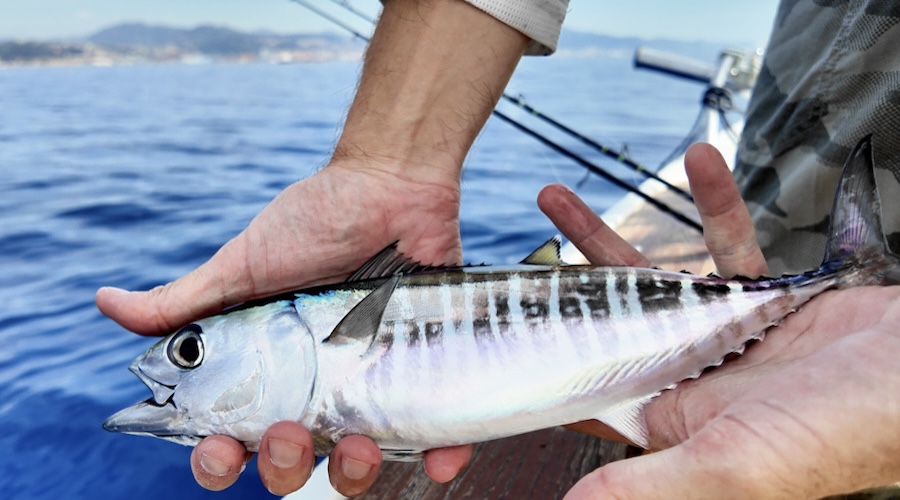
The only time of year when practicing it can be a bit more challenging, and more sophisticated stratagems are needed, is winter; for the rest of the year inshore trolling is a very enjoyable technique, particularly so in spring and fall. The reason for these two periods is explained by the life cycles of certain species, pelagic predators in particular, which are one of the targets of inshore trolling. In fact, in Spring and until the beginning of Summer, amberjack, tuna, setters, and dolphinfish, pull in for the spawning period, and specimens even of significant size can undermine our artificial lures or, in some cases, live ones.
In the fall, however, it is the new hatchlings, which are born during the summer and through the fall and into the onset of winter become generously sized, that are the target of our trolling trips. Successful inshore trolling on the high seas first requires finding the transit points of predators, and the areas where they can find forage. Watching the activities of the gulls is one of the things the fisherman must know how to do; seeing them circling over a spot and swooping down will be a signal that there something, below the water surface, is happening: probably schools of forage fish such as anchovies, below which predators may be present.
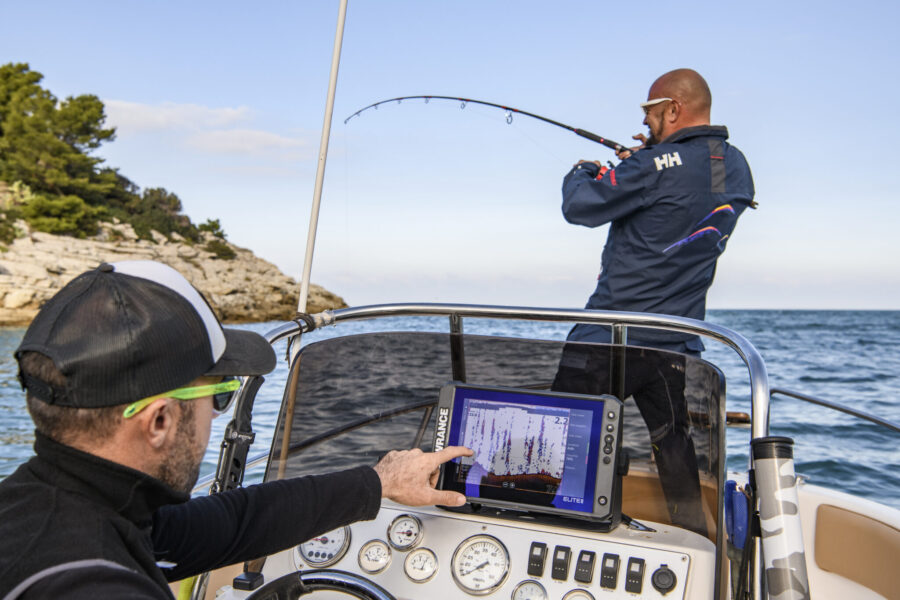
We will then be helped by electronic instrumentation, with the echo sounder, which will confirm the possible presence of forage. Trolling involves spinning a live artificial lure aft and precisely, towing it, waiting for it to attract a predator. It can be carried out at various speeds, depending on the artificial we are towing, and the fish we plan to catch.
For setters, dolphinfish, amberjack and tuna, there is no need to be afraid of being too fast, towing safely above 4 knots of speed. It will all depend on the artificial, if we are towing on the surface the speed will have to be adjusted so here this one (silicon or rigid bait), swims regularly and is not dragged out of the water. We will use small leaded silicones such as “octopuses” or plumettes, minnows with paddles usually less than 10 cm, in some cases sinkers can also be used to allow the lures to work at different heights, from the surface to lower positions.
A variation to the fish already mentioned can be in inshore trolling other species of small predators, such as carangidae (Atlantic horse mackerel and Mediterranean carangidae), saddled bream, garfish, mackerel, as well as greenhouse fish and bass if we are near an estuary or in port areas where fishing is allowed.
INSHORE FISHING: THE BOLENTINO
Bolentino is one of the most widely practiced techniques for fishing from the boat in Italy.
One of the most widely practiced techniques along our coasts is bolentino, or vertical bottom fishing, a classic of inshore fishing, using rigs with multiple booms, a final lead, and natural baits such as shrimp, sardine, or worms. For effective inshore fishing, finding the right areas to set our baits will be crucial: wrecks, landslides where the rocky bottom declines quickly, rocky headlands that hoist themselves isolated in an expanse of sand, steps where the bottom suddenly sinks, will all be areas worth trying. And locating them requires a little patience and good echo sounder work to find the right anchor points.
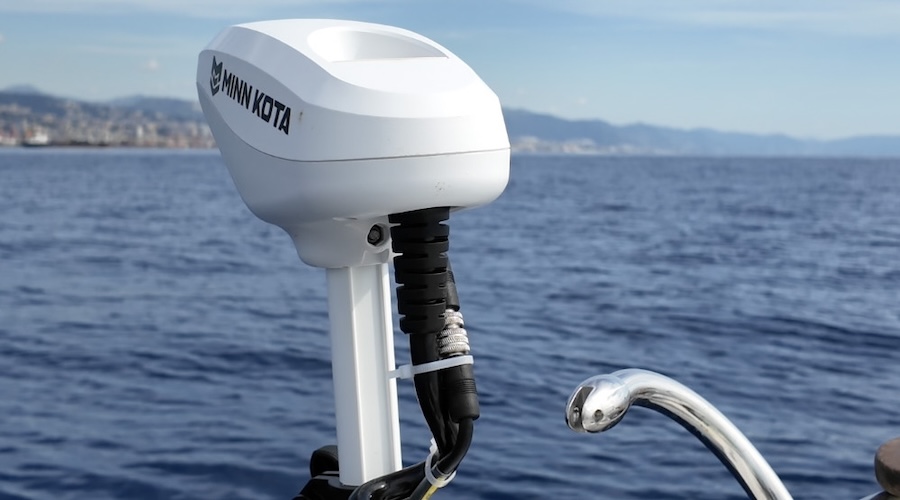
And speaking of anchoring, we can use a soft-rigged bolentino anchor, which will allow us to disengage it from even the most difficult rocky bottoms, or alternatively it is much more effective to use an electric fishing moped, which will keep us on the chosen spot by working with the current and the wave.
If we fish below cost, it will be difficult to encounter large bottoms, and realistically we will fish within 50 meters of the bottom. The target will be bream, panfish, sea bream, snapper, sea bream, and many other rockfish such as scorpionfish, groupers, or other less valuable ones such as scarrans or damselfish. Shrimp as bait turns out to be deadly for hermit crabs in particular, but also for many other species; sardine and squid are very suitable for bream, but a well-trimmed sardine can bring in even more important prey such as groupers, snappers, monsters, scorpionfish, and more. It can also bring us perhaps less welcome prey, such as the dreaded conger eels and moray eels-not everyone likes them, but when fishing offshore they can be a frequent encounter.
LIGHT DRIFTING AND ITS VARIATIONS
Tunnids are one of the typical targets of drifting fishing
At the same time we try trolling, spring and fall, we can also practice a light variant of drifiting, an inshore fishing variant, which can still hold huge surprises especially in Spring, the period of passage of large tuna as well. Drifting is a fishery that is practiced in the current, dropping a trail of bait (chopped sardines) and lowering in the wake our decoys, that is, a sardine primed whole or in chunks, lightly leaded or in some cases totally free, which can be accompanied on the surface by a bite marker.
The “light” version does not differ much from the classic one, except for lighter equipment, appropriate e- sca bites for medium-sized fish (which can be several kilograms, however). A further version of drifting, with live bait, can also be practiced.If we are lucky enough to find a few shoals of anchovies or sardines, hunted by tuna, we can try by means of a par- ticular bait, the sabiki (mini “featheries” made of attractive material), to catch some forage. We can then bait a few small sardines to drop into the current, and the result is almost assured. In this case sometimes we do not even need baiting, but just manage to get live bait.
SPINNING ON THE EATS
Spin fishing from the boat, on feeders, has been gaining popularity in recent years.
Spinning from the boat on eats is one of the most adrenaline-pumping techniques there can be to practice at sea. It is based on finding the mangianze, that is, searching for the spots where forage is being hunted by gulls and fish. It is actually one of the most typical techniques of deep-sea fishing, as sometimes you need to go very far from shore to look for them. From June to October, however, it can happen that eateries are also turned on in the undercut, because forage fish and greater and often tend to stay in the middle and surface states of the water.
We will devote a dedicated in-depth study to this technique later, for now it is sufficient to say that even in its inshore version it is best to equip yourself with “muscular” equipment, because surprise can be just around the corner: basically you are looking for tunnids (bluefin tuna, setters, mackerel) and mackerel (skipjack, mackerel, langoustine), but lampugas or other predators such as large garfish and jacks can reserve nice diversions. This is a fast fishery, which can take hours of searching for a miss and then have 10 minutes of adrenaline-pumping action. You need boats with powerful engines that can quickly reach a bite before it disappears, even pushing well over 30 knots if needed.
Powerboats, its stories, from small open to motoryachts. Sign up now for our free newsletter and receive the best news selected by the editorial staff each week. Enter your email below, agree to the Privacy Policy and click the “sign me up” button.
In recent years, the world of sport fishing has undergone a veritable revolution in terms of Electric propulsion systems designed for boat fishing. In the past, traditional internal combustion engines were used; today, there are electric bow thrusters, which are not merely means of propulsion, but actual Dynamic positioning systems and practical assistance for boat
The sport and recreational fishing, recreational boating, and outdoor communities are getting ready to set course for Rimini. From February 12 to 14, 2027, the exhibition center in this city in Romagna will host the latest edition of Pescare Show, the trade show organized by Italian Exhibition Group (IEG) that serves as a key event
Fall has officially begun, and for sport fishing enthusiasts, it’s the most exciting time of the year. After the summer heat and record-high water temperatures, the first fall storms cool and reoxygenate the sea, reawakening the entire food chain. In the new video posted on the Barche a Motore YouTube channel, we head along the
We attended the final of the Suzuki Fishing Cup, the exciting fishing tournament organized by Suzuki and held over four stages from May to September, to see up close how a competition dedicated to drifting unfolds and to discover what features a boat needs to best handle this technique. The perfect boat for drifting Drifting
Gestisci Consenso Cookie
Per fornire le migliori esperienze, utilizziamo tecnologie come i cookie per memorizzare e/o accedere alle informazioni del dispositivo. Il consenso a queste tecnologie ci permetterà di elaborare dati come il comportamento di navigazione o ID unici su questo sito. Non acconsentire o ritirare il consenso può influire negativamente su alcune caratteristiche e funzioni.
Funzionale
Always active
L'archiviazione tecnica o l'accesso sono strettamente necessari al fine legittimo di consentire l'uso di un servizio specifico esplicitamente richiesto dall'abbonato o dall'utente, o al solo scopo di effettuare la trasmissione di una comunicazione su una rete di comunicazione elettronica.
Preferenze
L'archiviazione tecnica o l'accesso sono necessari per lo scopo legittimo di memorizzare le preferenze che non sono richieste dall'abbonato o dall'utente.
Statistiche
L'archiviazione tecnica o l'accesso che viene utilizzato esclusivamente per scopi statistici.L'archiviazione tecnica o l'accesso che viene utilizzato esclusivamente per scopi statistici anonimi. Senza un mandato di comparizione, una conformità volontaria da parte del vostro Fornitore di Servizi Internet, o ulteriori registrazioni da parte di terzi, le informazioni memorizzate o recuperate per questo scopo da sole non possono di solito essere utilizzate per l'identificazione.
Marketing
L'archiviazione tecnica o l'accesso sono necessari per creare profili di utenti per inviare pubblicità, o per tracciare l'utente su un sito web o su diversi siti web per scopi di marketing simili.